
Turn a long course into modules students can follow
Group lessons into modules, choose their order and separate required work from reference material in Taskpipe.
A list of thirty lessons tells a student how much content you have. Modules can show how the work fits together: first learn the basics, then practise, then produce something you can assess.
In Taskpipe, modules do more than divide the outline. You can set the order of modules and lessons separately, decide which work is required and keep reference material outside the path to completion.
Build around a result for each module
A photography course could have three modules:
- Control light and framing: short lessons and a quiz to check the basics.
- Tell a photo story: examples, practice and a five-photo submission.
- Prepare a final portfolio: select the work, explain the choices and submit it for review.
This structure gives each part a purpose. The quiz checks the knowledge students need for the story. The story gives them work to choose from for the portfolio.
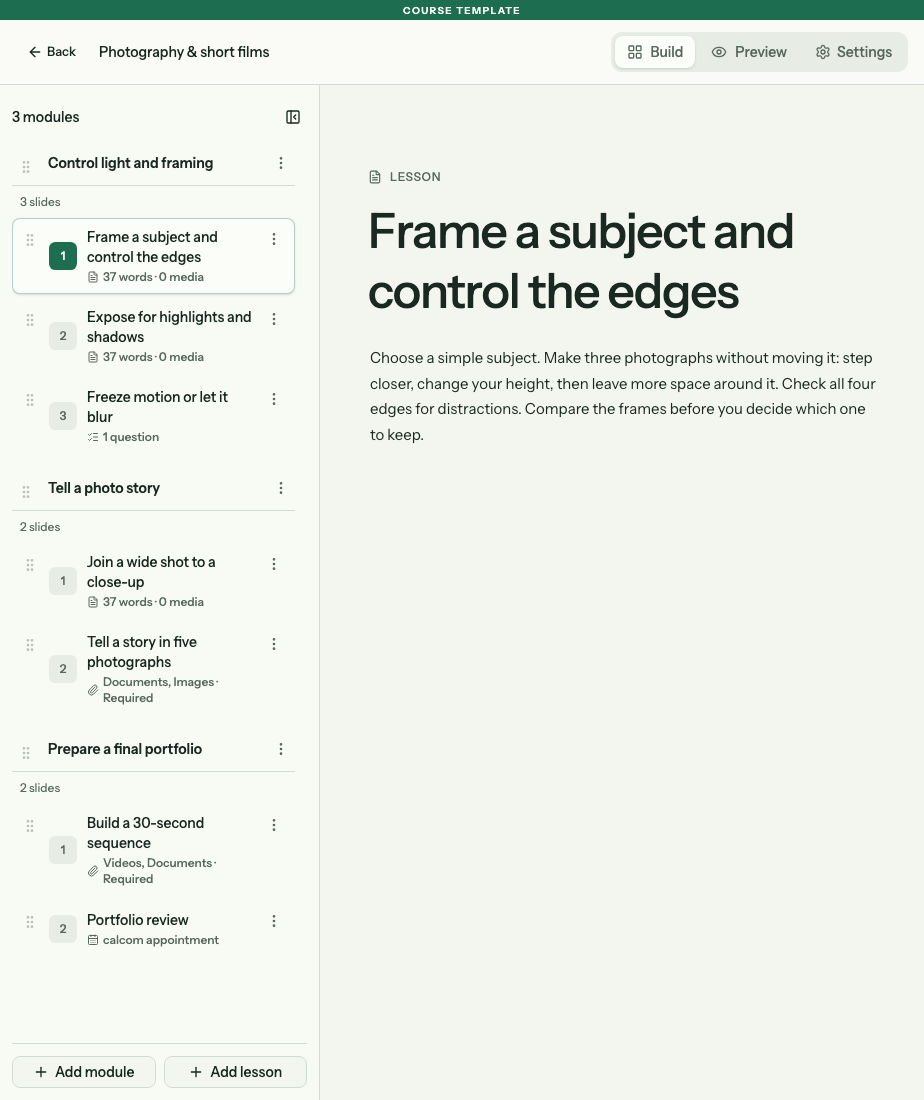
The photography course grouped into three modules, from the basics to the final portfolio.
You can add and rename modules, move lessons between them and change their order in the course builder. The lesson guide covers the setup.
Choose where order matters
Module order and lesson order answer different questions. Must students finish the basics before starting the project? Within the project module, must they follow every lesson in sequence?
You can require modules in order while letting students choose among available lessons inside each one. Or let students choose a module while keeping a set lesson order within it. When you require an order, earlier required work controls what becomes available next.
This lets you give more freedom where it helps. A student might choose which example to study first while still having to complete the core work before the final project. Opening dates, submission requirements and teacher approval continue to apply.
Make completion mean something clear
Required lessons count towards course completion. Resources do not, so a reference PDF or an extra example does not become another task students must finish.
Practice classes sit outside the ordered lesson path. You can still make one required for course completion. That is useful when students can practise at different points but must complete that work before finishing the course.
The progress percentage follows required work. Decide what every student must do, then test that path before opening enrolment. A course needs required work to reach completion.
Connect the path to the final result
For the photography example, you might require the foundations quiz, the photo story and approval of the final portfolio. Optional reference material can remain available along the way.
Those requirements also give an automatic certificate a clear basis. Students know which work earns it, and you can see that work in their course record. Use reusable quizzes where a knowledge check belongs in the path.